
Why Roofing Projects Create a Unique Waste Challenge
A roofing tear-off generates two problems at the same time: a large volume of material and an unusually high concentration of weight. A typical residential roof replacement on a 1,500 to 2,000 square-foot home in Aiken can yield anywhere from 1.5 to 3 tons of old shingles alone - before you factor in underlayment, damaged decking boards, drip edge, flashing, or ventilation components that may need to come off as well.
That combination of bulk and weight is exactly why renting a dumpster for a roofing project requires a bit more planning than renting one for a general cleanout. Volume-based thinking ("I'll just get the smallest bin") can lead to costly surprises when the trailer hits its weight threshold before it's anywhere near full. This guide walks through everything you need to know before you schedule your roofing dumpster rental in Aiken, Graniteville, or North Augusta.
The Shingle Half-Capacity Rule - and Why It Exists
Roof shingles are accepted, but they may only fill up to half the dumpster's total volume capacity. You are still responsible for any weight overages, even when you stay within the volume limit. Exceeding the weight allowance incurs an overage charge of $50 per ton.
This rule exists because asphalt shingles are exceptionally dense. A single layer of three-tab shingles weighs roughly 230 to 250 pounds per square (100 square feet). Architectural shingles run heavier - often 350 to 400 pounds per square or more. A full tear-off of a double-layered roof pushes those figures even higher. If you were to fill our 17-yard trailer completely with shingles, the load could easily exceed 8 to 10 tons - far beyond the 3-ton weight limit the trailer is rated for at that size.
Limiting shingles to no more than half the container's volume is a practical safeguard. It keeps total load weights in a manageable range and helps prevent axle stress, road hazards during transport, and disposal site complications. Think of it this way: the dumpster has both a volume ceiling and a weight ceiling. For heavy materials like shingles, the weight ceiling tends to be the binding constraint, and the half-capacity rule is designed to keep you under it.
Understanding Weight Limits and Overage Costs
Every rental includes a per-dump weight allowance tied to the dumpster size you choose. Here is how those allowances break down:
- 12-yard dumpster ($285): Includes 2 tons per dump. Dimensions 12×7×4 ft. Rental period: 3 days plus 1 dump.
- 15-yard dumpster ($345): Includes 2.5 tons per dump. Dimensions 14×7×4 ft. Rental period: 3 days plus 1 dump.
- 17-yard dumpster ($375): Includes 3 tons per dump. Dimensions 16×7×4 ft. Rental period: 3 days plus 1 dump.
Weight overages are charged at $50 per ton beyond your included allowance. That charge is determined at the disposal facility when the load is weighed - you cannot gauge it visually from the job site, which is why understanding the density of roofing materials before you load matters so much.
Roofing debris is denser than most residential waste. Understanding weight limits before you load is the most important step. Not sure which size fits your project? Call us at (803) 679-8899 and we can help you think through the load based on your roof's area and the scope of the tear-off.
What Else Can Go In Alongside Roofing Debris
A roofing project often involves more than just shingles. Many customers load a mix of materials, and that is fine provided everything stays within the weight limit and prohibited items are kept out. Alongside shingles, the following roofing-related materials are generally accepted:
- Roofing felt and synthetic underlayment
- Damaged or rotted roof decking (OSB and plywood)
- Wood fascia boards and soffits
- Metal drip edge and step flashing
- Ridge caps and valley materials
- Roofing nails and staples (contained in debris)
- Standard pipe boots and basic vent covers
- Gutters and downspouts (metal, aluminum, or vinyl)
Mixing lighter materials - plywood decking, felt paper, aluminum gutters - alongside shingles is actually a smart loading strategy. These items take up volume without adding the same density per cubic foot that shingles do, which helps you make fuller use of the dumpster's capacity without running up against the weight limit as quickly. See our full guide on what can go in a rental dumpster for a complete breakdown.
A/C and HVAC units removed during a roofing project are accepted with special handling - place them beside the dumpster, never inside it, so they can be handled separately for refrigerant recovery; a flat $25 fee applies per unit. Skylights with sealed glazing units, solar panels, or other large mechanical equipment may contain sealed gases or hazardous materials. If you are pulling this type of equipment, contact us before loading it. We will let you know how to handle it properly to avoid disposal issues or additional fees.
What Cannot Go In - Even on a Roofing Project
A number of materials commonly found at construction and demolition sites are prohibited regardless of what type of project you are running. For roofing projects specifically, these exclusions matter because contractors sometimes assume all construction debris is treated the same way. It is not.
The following materials are not accepted in any of our dumpsters:
- Concrete - including broken foundation sections or concrete pavers uncovered during exterior work
- Brick and masonry - chimney bricks, mortar, block
- Asphalt - asphalt pavement, asphalt patch material (note: asphalt shingles are accepted under the half-capacity rule; asphalt paving material is not)
- Rock and gravel - no landscape stone, ballast, or drainage rock
- Soil and dirt
- Logs and tree stumps
If your project involves chimney work or repointing, be aware that brick and mortar from the chimney stack fall under the prohibited category. Those materials require a separate disposal arrangement. Review the full prohibited and restricted items list before loading so you are not caught off guard at pickup.
Choosing the Right Dumpster Size for Your Roofing Project
Roofing projects vary significantly in terms of roof area, number of layers being removed, and what else is being torn off at the same time (gutters, fascia, decking). Because of that variation - combined with the density of shingle material - the right size depends on the specifics of your project.
Not sure which size fits your roofing project? Contact Aiken Dumpster Rentals and we'll help you choose based on the roof area, material type, and scope of work. You can book online through our rental booking page or call us at (803) 679-8899 to talk through the details before you commit to a size. Visit our sizes and pricing page for dimensions and weight limits across all three trailer sizes.
Property Access and Driveway Placement for Roofing Loads
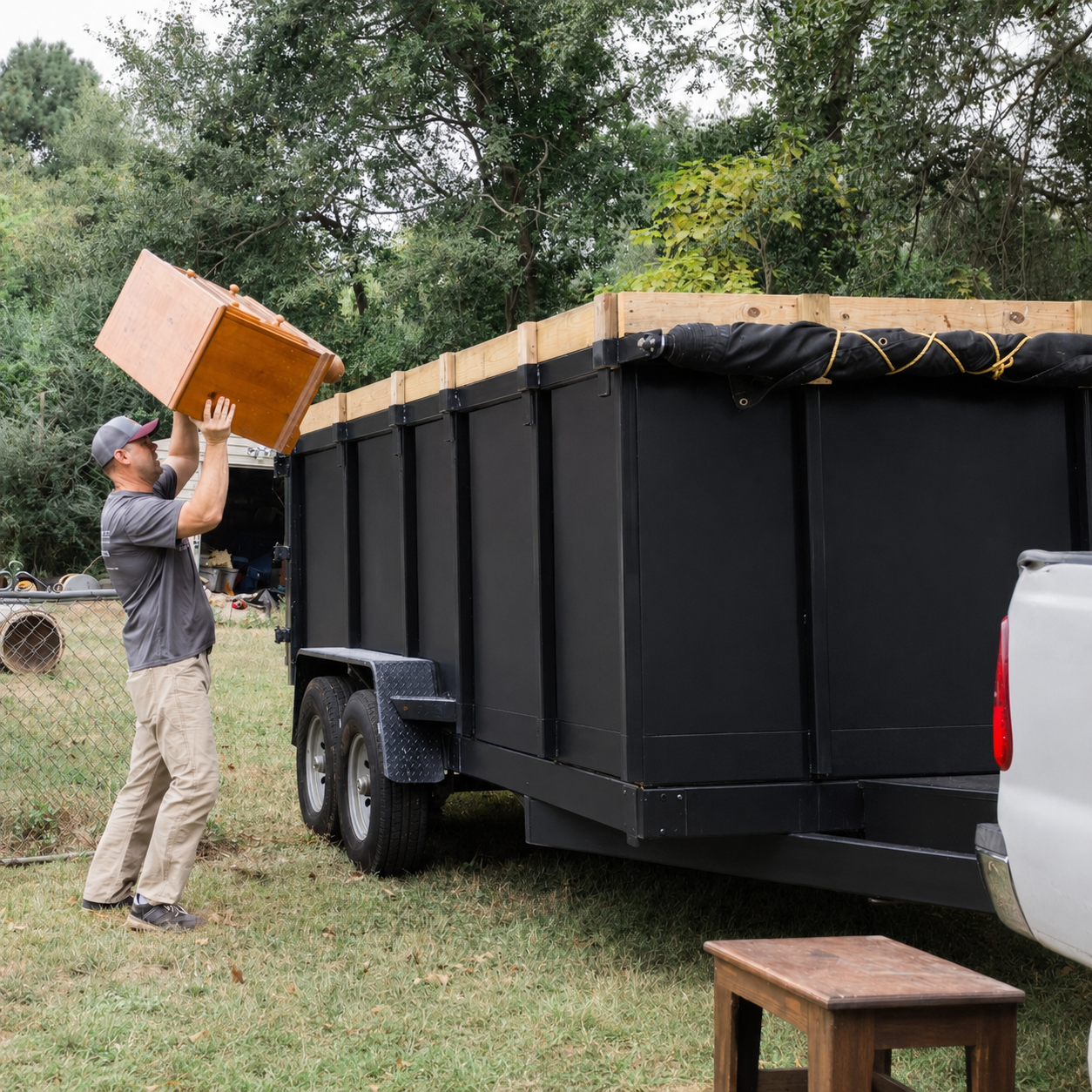
Roofing debris is heavier than most residential waste, and that weight is worth considering when it comes to where the dumpster sits during your project. We use rubber-wheeled dump trailers rather than traditional roll-off containers with heavy steel rails. This equipment is designed to minimize the risk of surface damage during placement - a meaningful advantage when you are already dealing with the logistics of a roofing crew on-site. There is also a meaningful difference in the delivery and retrieval vehicle: a traditional roll-off truck is a very heavy vehicle, and when it retrieves a loaded container it must bear the full weight of that loaded dumpster on its frame - placing substantial additional stress on your driveway and the ground near its edge. Aiken Dumpster Rentals uses a truck to tow the trailer rather than a traditional roll-off truck that must load and support the container during pickup, which reduces that stress on your property - a meaningful difference when the load itself is already heavy roofing material.
That said, a full roofing load does add cumulative weight to whatever surface the trailer rests on. Asphalt driveways that are already soft or cracked may show more wear under a heavy load, particularly in warm weather. If you have concerns about your driveway condition or need placement on a specific surface - grass, gravel, or a narrow access point - mention it when you call. We can discuss options and help determine the best placement approach for your property.
For roofing projects, it also helps to position the dumpster where shingles can be tossed or slid directly from the roof edge without excess carrying distance. Efficient loading from height also tends to distribute weight more evenly through the debris pile rather than creating a dense brick of shingles at the bottom - which is better for both the load balance and for keeping you under the weight threshold.
How to Request a Roofing Dumpster Rental
Booking a roofing dumpster with us works the same as any other rental - the main difference is that it is worth telling us upfront that you are loading roofing material. That way we can confirm the right size for your situation and remind you of the shingle half-capacity rule before delivery so there are no surprises during the rental period.
You can book online through our rental booking page or call us directly at (803) 679-8899. We serve Aiken, Graniteville, and North Augusta. Weekend delivery is available depending on scheduling - ask when you call if timing is tight around your roofing crew's schedule.
If you are a roofing contractor looking for reliable rental service for multiple projects, we are happy to talk through what a working relationship looks like. We keep things straightforward: clear pricing, local service, and equipment that is designed to work in residential neighborhoods without creating extra headaches for your customers.