
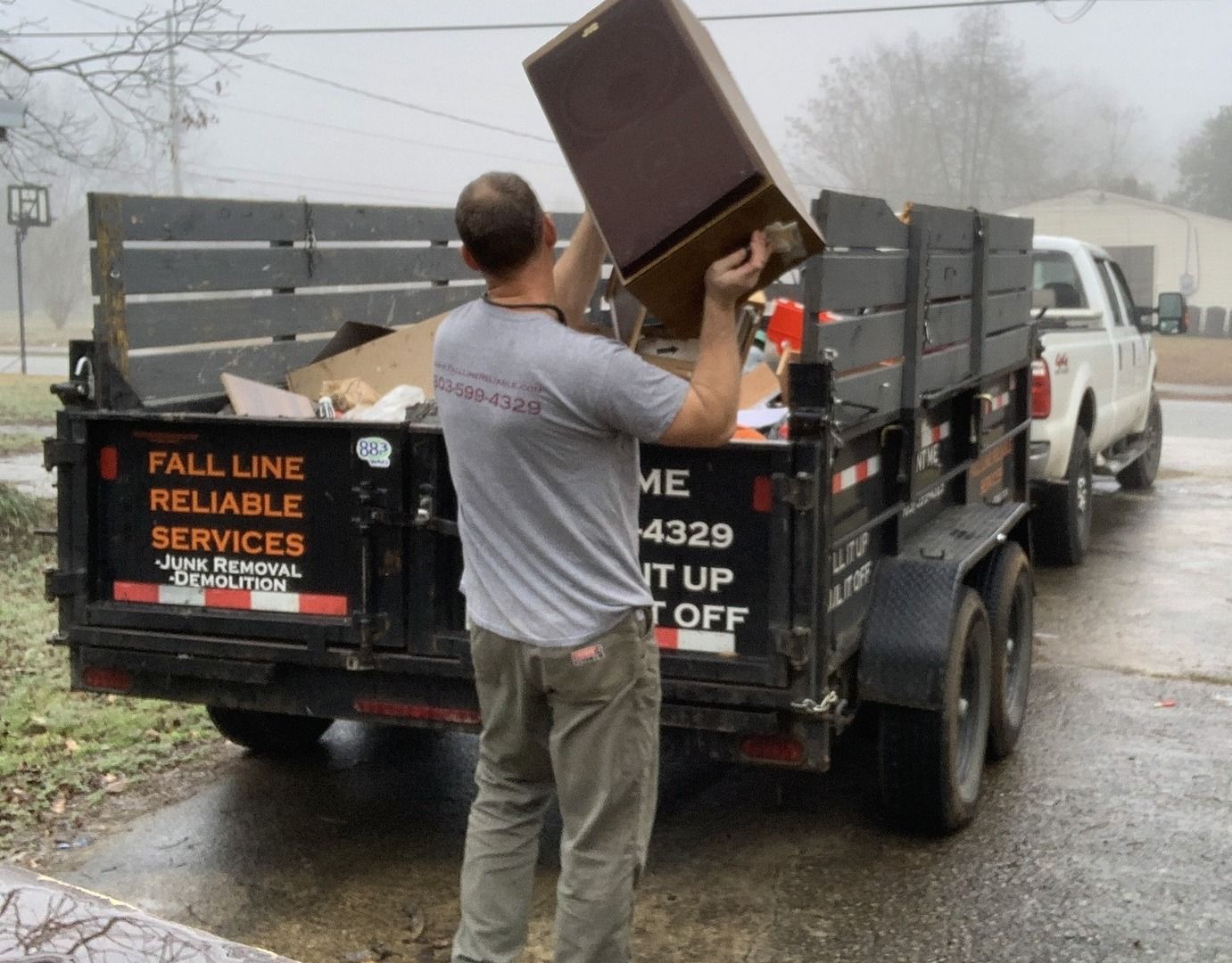
Whether you are cleaning up after a summer storm, clearing years of overgrowth, or tearing out an old fence and patio, outdoor projects can produce a surprising amount of debris in a short amount of time. A dumpster rental keeps everything in one place so you can work through the yard without making repeated junk runs or piling debris at the curb and hoping for a pickup.
This guide covers what outdoor and storm-related debris is accepted, what is strictly not allowed, how to estimate weight for yard waste, and what to know about placing a dumpster on soft or wet ground after a storm.
1. Why Outdoor & Storm Cleanup Often Needs a Dumpster
Yard debris accumulates fast once you get started. A single afternoon of brush clearing, fence removal, or storm-damage assessment can leave you with far more material than a truck bed or a couple of trash cans can handle. Common outdoor projects that benefit from a dumpster rental in Aiken include:
- Storm damage cleanup - downed limbs, damaged fencing, debris scattered across the yard
- Spring and fall yard overhauls - trimming, clearing, cutting back overgrown areas
- Fence removal and replacement - old wood, metal posts, wire, and concrete footing material (see restrictions below)
- Deck and patio demolition - treated lumber, composite boards, screws, posts
- Landscaping projects - old mulch, dead shrubs, removed garden beds
- Outbuilding or shed demolition - wood siding, roofing material, framing
Rather than making ten trips to the landfill or waiting on a bulk pickup schedule, a dumpster parked in your driveway or yard lets you work at your own pace through your rental period.
2. What Outdoor Debris Is Accepted
The following materials are generally accepted in our dumpsters for yard and outdoor projects. When in doubt, call us at (803) 679-8899 before loading - it is always better to ask first than to face an unexpected charge or rejected load.
- Branches and cut limbs - accepted, but see the weight note below
- Shrubs and cleared vegetation - generally fine
- Old fencing - wood boards, metal chain-link, posts (without large concrete footings attached)
- Broken patio furniture - plastic, metal, and wood outdoor furniture
- Siding and exterior trim - wood, vinyl, and fiber cement siding
- Lumber and dimensional wood - treated decking boards, framing, plywood
- General outdoor junk - garden tools, broken pots, old hoses, playground equipment
- Yard waste - leaves and clippings, bagged or loose, are generally accepted; call to confirm for large volumes
- Storm-damaged structures - broken pergolas, carports, small outbuildings
Not Sure? Call First.
Branches and brush are accepted, but large volumes of wet vegetation can add weight quickly. If you are filling a dumpster mostly with limbs and cut brush, give us a call at (803) 679-8899 before booking so we can help you choose the right size and weight allowance.
3. What Is NOT Allowed - Know Before You Load
Several common outdoor and landscaping materials are not accepted in our dumpsters. These restrictions exist because of weight limits, disposal regulations, and facility requirements at the landfill. Placing prohibited items in the dumpster can result in additional fees or a rejected load.
Prohibited Outdoor Materials - These Cannot Go In
- Whole logs - large sections of tree trunks are not accepted
- Tree stumps - stumps and root balls cannot go in the dumpster
- Soil and dirt - no topsoil, fill dirt, or excavated earth
- Rock and gravel - even small amounts add extreme weight quickly
- Concrete and bricks - no broken concrete, paver bricks, or masonry rubble
- Asphalt - no driveway asphalt or asphalt shingles mixed with yard debris loads
If your project involves removing concrete pavers, a brick border, a gravel path, or a concrete pad, those materials need to be handled separately. See the full prohibited items list for the complete breakdown, or call us to discuss options for heavy materials.
Household garbage, household trash, and municipal solid waste (MSW) are prohibited - keep regular garbage out of the dumpster entirely and put it in your normal household bins. This dumpster is meant for project-specific yard debris only.
4. Weight Considerations for Outdoor Debris
Yard waste is generally lighter per cubic foot than construction debris like concrete or tile, but it can still add up - especially when wet. After a storm, vegetation that has absorbed rain can be significantly heavier than dry material. Here is what to keep in mind:
- Wet branches and limbs - much heavier than dry wood. If you are loading immediately after a storm, factor in the added moisture weight.
- Dense vegetation - packed brush and green material has more weight per load than it looks. Do not underestimate a full dumpster of fresh cuttings.
- Mixed loads - combining lighter yard waste with heavier fence boards and dimensional lumber is generally fine, but avoid heavy landscape rock or soil, which can push you over the weight limit with just a small amount.
Our weight allowances by size:
- 12 yard: 2 tons included - starting at $285 (3 days + 1 dump)
- 15 yard: 2.5 tons included - starting at $345 (3 days + 1 dump)
- 17 yard: 3 tons included - starting at $375 (3 days + 1 dump)
Additional weight beyond your included allowance is charged at $50 per ton. If you think your project might be on the heavy side, stepping up one size is often the more economical choice. See the full sizes and pricing page or the dumpster cost guide for more detail.
Debris Must Stay Inside the Dumpster
All debris - including branches, limbs, and loose material - must be contained within the walls of the dumpster. Nothing should hang over the sides or extend above the top edge. This is especially important with long limbs that can shift during transport.
5. Seasonal Considerations: Storm Aftermath vs. Planned Yard Cleanup
Storm Cleanup
After a significant storm - whether from summer thunderstorms or a tropical weather event - Aiken-area properties can end up with scattered limbs, downed trees, damaged structures, and debris across the yard. Acting quickly matters: storm debris left on the ground invites pests, tripping hazards, and further damage from secondary weather events.
Key points for storm cleanup rentals:
- Book as soon as possible - demand for dumpsters spikes after major storms in the area
- Account for wet, heavy material - limbs and vegetation will be heavier than normal right after a storm
- Damaged structures (pergolas, fencing, small sheds) - generally accepted in the dumpster
- Whole downed trees must be cut into manageable sections; stumps and root balls still cannot go in
- Call first if you are dealing with a large volume of material so we can help you estimate the right size
Spring and Fall Yard Cleanup
Planned seasonal cleanups are a great use of a short-term dumpster rental. Spring projects often include clearing winter damage, trimming back growth, and removing dead plants. Fall projects typically involve leaf and debris removal, preparing garden beds, and clearing out anything that did not survive the season.
For planned cleanups, you have the advantage of timing - schedule your delivery on a day when you know you will have time to work through the project, and book a few days in advance to secure your preferred date.
6. Choosing the Right Size for Outdoor Projects
Outdoor debris tends to be bulky but relatively light compared to construction materials. That said, you still need enough volume to hold everything. Here is a general guideline:
- 12 yard ($285): Good for a small brush pile or focused cleanup - branches, shrubs, and light yard debris from one area of the property.
- 15 yard ($345): Good for a medium brush pile or a more substantial yard cleanup with a larger volume of light material.
- 17 yard ($375): Good for a large brush pile or widespread yard debris across multiple areas of the property.
- Not sure which size fits your project? Contact Aiken Dumpster Rentals and we'll help you choose based on the type and amount of material you need to remove.
Not sure which size fits your project? The dumpster size guide walks through the decision in more detail, or give us a call and describe what you are working with.
7. Driveway and Placement - Soft or Wet Ground After Storms
Placement is always an important consideration, but it is especially important after a storm when ground conditions may be soft or saturated. Our dumpster trailers use rubber-wheeled equipment and are designed to minimize the risk of surface damage - a meaningful advantage over traditional roll-off containers when you are dealing with soft, wet soil. There is also a vehicle difference worth knowing: when a traditional roll-off truck retrieves a loaded container, the truck must bear the full combined weight of the vehicle and the loaded dumpster, placing substantial stress on the driveway and the ground near its edge. Aiken Dumpster Rentals uses a truck to tow the trailer rather than a traditional roll-off truck that must load and support the container during pickup, which reduces that stress during both drop-off and pickup.
A few placement tips for outdoor projects and storm cleanups:
- Driveways: Concrete and paved asphalt driveways are the most common placement surface. Our rubber-wheeled trailers help reduce surface stress compared to standard roll-off trucks, though no equipment can guarantee zero impact on all surfaces.
- Grass and soft ground: If you need the dumpster placed on a lawn or unpaved area, be aware that soft or wet soil after a storm increases the risk of rutting or sinking. We recommend placing the trailer on firmer ground when possible.
Protect Soft Ground with Plywood
If you need to place the trailer on grass or soft soil after a storm, laying down a sheet or two of 3/4-inch plywood under the wheels can help distribute the load and reduce impact on the surface beneath. It is a simple step that can make a noticeable difference on wet or recently disturbed ground.
If you have concerns about a specific placement location - a narrow driveway, a sloped yard, or soft post-storm ground - give us a call before booking and we can talk through the best approach. Learn more about our driveway-safe trailer advantage.
8. How to Book a Dumpster for Yard or Storm Cleanup
Booking is straightforward and you do not need to be home for delivery or pickup. Here is how the process works:
- Choose your size - use the guide above or call us to talk through your project.
- Pick your delivery date - standard rentals include 3 days. If you need more time, extra days are available at $25 per day.
- Tell us where to place it - let us know the preferred spot (driveway, side yard, etc.) when you book.
- Load at your pace - work through the project during your rental period and keep all debris inside the dumpster walls.
- We pick it up - when you are done (or when your rental period ends), we handle the rest.
Swaps - exchanging a full dumpster for an empty one - are available at the base rate minus 10%, on weekdays between 7 am and 5 pm, if your project produces more volume than expected.
Ask About Your Project
Not sure what size you need or whether your material qualifies? Call us and we will help you figure it out before you book.
Book a Rental